
Analysis by Jean Lemierre
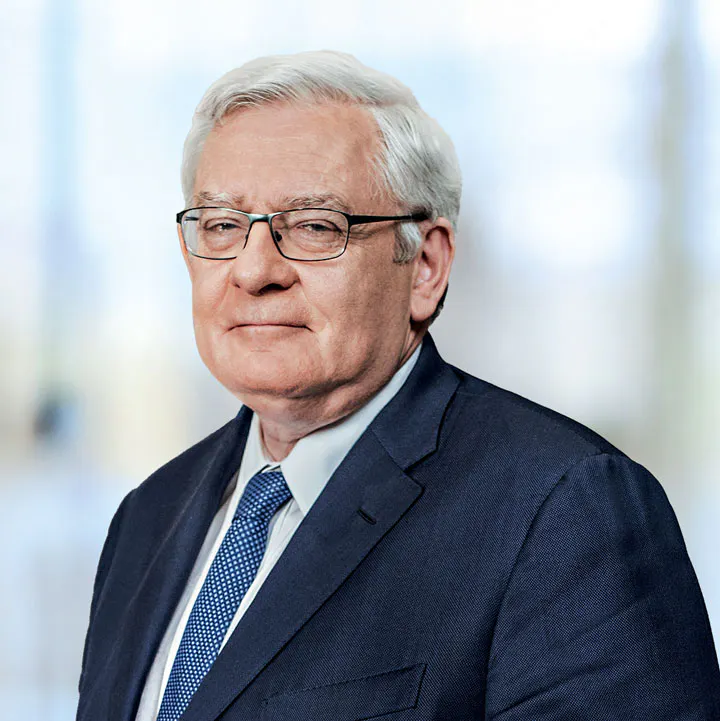
“Far from being mere financial intermediaries, banks are proving that, now more than ever, they are trusted partners. In a fragmented world, they remain pillars of an essential common good: the stability and prosperity of economies.”
In 2025, there was a shift in the balance of power, a realignment of global trade and an unprecedented acceleration in technological innovation. Yet, despite this increasingly complex environment, significant opportunities continue to emerge in Europe.
The escalation of geopolitical tensions throughout the year led to major macroeconomic repercussions. The proliferation of trade barriers, and customs duties in particular, has led to a rethink of the organisation of international trade and strategic supply chains, which are now being shaped by concerns about sovereignty.
Despite these successive shocks, which have undeniably weighed on economic activity and corporate investment decisions, growth remained robust in the United States and China. In this context, Europe is experiencing growth that, although moderate, remains positive, and offers new prospects. Germany thus launched a massive investment plan that is expected to spur a return to growth as early as 2026, which will benefit all its partners. Meanwhile, the European Union is well aware of the need to adapt to the new rules of the game in order to defend its interests, particularly by consolidating its internal market, thereby providing companies with a much-needed catalyst for growth. To do so, it has significant room for manoeuvre. It can further integrate its market and, notably, bring the Savings and Investments Union to fruition to better harness its abundant savings. Its investments in strategic sectors such as payments and defence help to strengthen its sovereignty, while the eurozone’s credibility continues to grow in the eyes of investors, as evidenced by the narrowing of yield spreads between Germany and most other member states.
In terms of tech, 2025 saw a noticeable surge in companies’ use of artificial intelligence, leading to increased efficiency and productivity. Like any major innovation, it comes with an unprecedented set of challenges. Beyond addressing cyber risks, skills must be adapted and training provided, especially among younger generations. It is of central importance to Europe, which boasts the talent, financial resources, and a vibrant ecosystem of players that should be supported collectively through a mechanism combining data protection, skills development, and innovation capacity.